
Can the Pathways Reverb & Tremolo Do Classic Rock? Absolutely!!
What is “classic rock”? Is it ’50s R&B, ’60s British invasion and psychedelia, ’70s punk and blues rock, ’80s arena rock, or is it ’90s alternative? The answer is yes, it’s all of those things and more.
Ever since the rise of the electric guitar in the 1950s, musicians have found countless ways to shape its sound to fit with and pioneer new playing styles, musical genres, and groundbreaking bands. The Pathways Reverb & Tremolo was developed with the specific goal of capturing the essential reverb and tremolo tones that have accompanied the guitar at every stage of its sonic evolution.
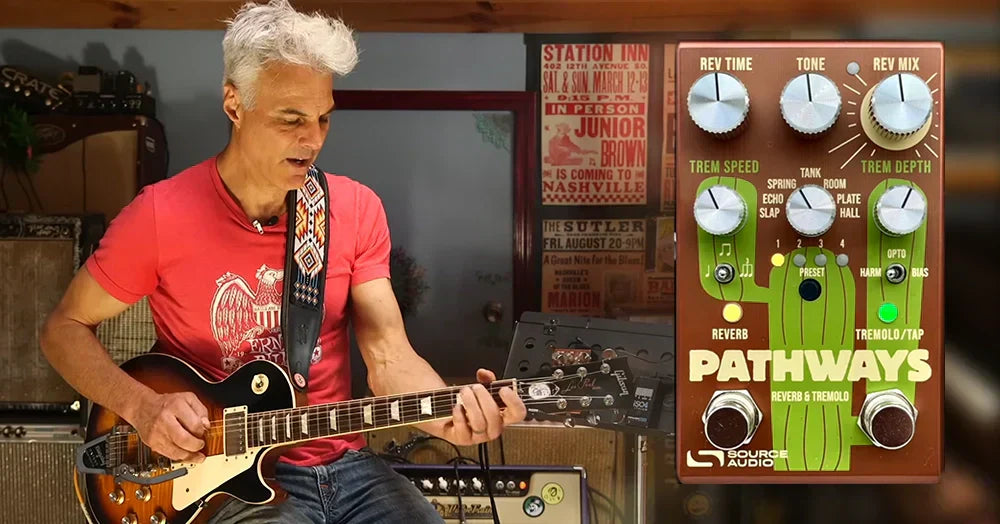
Moving from left to right on the Pathways' effect selector knob we included all the essential, starting with the sound of Sam Phillip's tape echo at the legendary Sun Studio in Memphis, Tennesse. Tape echo and slapback are sounds made famous by guitarist Scotty Moore and the rest of Elvis Presley's original band as well as tight Telecaster twang of Luther Perkins and the Johnny Cash band.
The pedal also features Source Audio engineer, Bob Chidlaw's brilliant recreations of the bouncy spring reverbs found most notably in the Fender Deluxe Reverb combo amps of the early to mid '60s. It also includes Tank reverb, the mega "drippy" and super animated tones of the Fender 6G15 outboard spring tank. The 6G15 reverb sound is a must-have for any surf or spaghetti western inspired guitar player.
PURCHASE THE PATHWAYS REVERB & TREMOLO

Moving on to the more ambient side of Pathways. The Room reverb is a beautiful take on the legendary echo chambers found deep beneath the Capitol Records Building in Los Angeles, California—a lush, natural-sounding reverb that captures the reflections of a real acoustic space.
Of course, no proper studio is complete without an EMT 140 plate reverb unit. These massive 8 feet wide by 4 feet tall machines were developed by Elektro-Mess-Technik in the 1940s. As you might imagine, a behemoth like this does not come cheap. A vintage unit will cost you somewhere in the neighborhood of $15,000 and $18,000 (ouch!). And good luck loading an actual plate reverb unit into your local rock venue. Fortunately, you can get those beautifully dense, smooth reverberations from Pathways’ Plate engine.
Finally there is the Hall reverb, based on the "Large Random Hall" preset from the 1980s Lexicon 480L Digital Effects System. It delivers the sprawling, pristine digital reverb sound that became ubiquitous on recordings of the 1980s and 90s.
But that's not all! Pathways also lets you combine any of the reverbs with any of its three vintage tremolo effects. The Opto tremolo (a.k.a. “Photocell Tremolo”) is based on the technology found in many combo amps of the 1960s. This version of tremolo relies upon a neon light bulb and a light dependent resistor called an "optocoupler." The non-symmetrical aspects of the light and the optocoupler give the tremolo a beautiful "swampy" quality at moderate depths and a dramatic, square wave-ish chop at more extreme depths.
The Bias tremolo is based on the tech found in early combo amps. These amps use an LFO to modulate the bias voltage of the tubes, pushing the output level up and down. The result is a rounder amplitude modulation with a mild overdrive created by the tube saturation.
The Harmonic tremolo is based on a sound that first appeared in Fender "brownface" amps made between 1959 and 1963. It's a smooth and complex sound that alternately modulates the levels of the bass and treble frequencies, creating an effect reminiscent of a phaser or Leslie rotating speaker.
How about we check out Pathways in action? The talented team at Premier Guitar recently released of an excellent Pathways demo. Their resident guitar guru, John Bohlinger, left no riff unplayed in his exploration of the many classic rock capabilities housed within Pathways.
Of course, John Bohlinger isn’t the only guitarist to explore the history of rock through the many reverb and tremolo effects found in Pathways. There were also outstanding videos from a number of killer six-stringers in the YouTube universe.
R.J. Ronquillo is an absolute beast! He ripped into Pathways with a vengeance. If there is a style worth visiting, R.J. goes there. Swampy blues licks, drippy surf rock, early R&B staccato stabs, gliding arena rock arpeggios, rootsy Americana–it's all here.
Mike Hermans is one of the smoothest, most tasteful guitarists you're going to hear. Mike hits all the bases in his Pathways demo, from tremolo infused Bo Diddly rhythms to Hendrix "Little Wing" style extensions and suspension to '70s jazz rock.
We also produced two in-house demos for Pathways. In the first video, Source Audio’s own Jeff McAlack walks you through everything there is to know about the Pathways Reverb & Tremolo, explaining the history and technology behind each effect with plenty of guitar accompaniment to illustrate each point. The second video is an "all rock, no talk" tour through the pedal, featuring some amazing guitar playing from our friends Lyle Brewer, Steven Avelar De Oliveira, and Source Audio’s own Phil Cambra.
While we're here, let's visit one last Pathways demo from surf rock aficionado, Ryan Burke (a.k.a. 60 Cycle Hum). Ryan explores all of the sounds in Pathways, but puts extra special care and dedication to the Spring and Tank reverbs. It you love spring reverb, this is the video you need to watch!
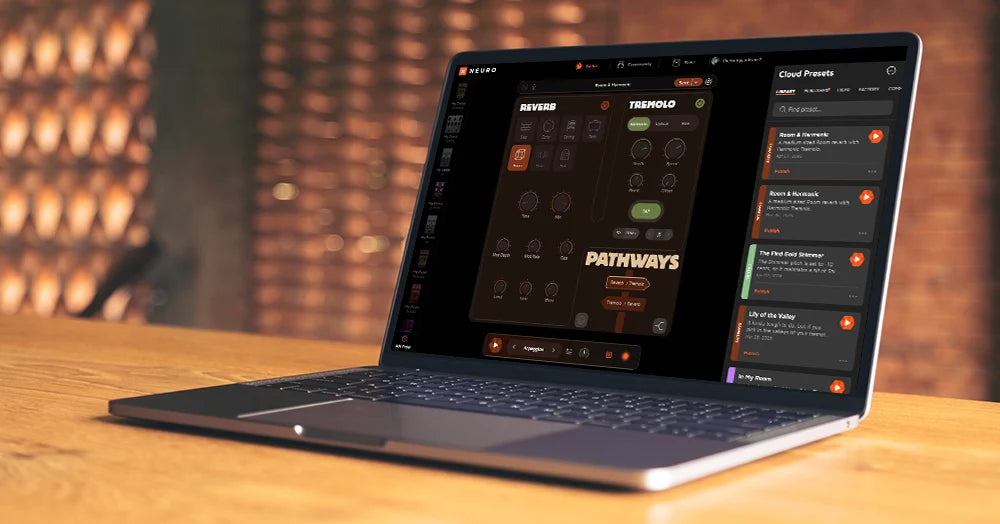
To learn more about our new reverb and tremolo pedal, be sure to visit the Pathways Product Page. It includes all the details and specs to help you understand the full capabilities of this powerful new pedal.
Pedals in this Article

Leave a comment
This site is protected by hCaptcha and the hCaptcha Privacy Policy and Terms of Service apply.