Shoegaze Guitarists! Meet the Pathways Reverb & Tremolo
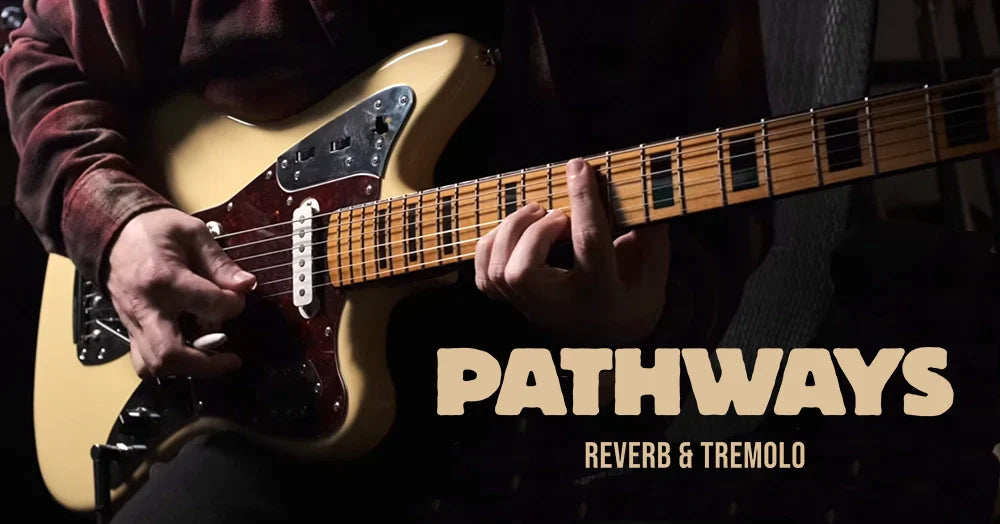
What is shoegaze guitar? Well, it’s loud, dreamy, wet, fuzzy...and did we mention loud? As makers of more than a few well-regarded reverb and delay pedals, shoegaze is a genre that’s always been close to our hearts.
First we need to quickly fill everyone in on the backstory. With shoegaze it's all about atmospheric textures and total sonic immersion. For the most part you're not going to hear smoothly articulated riffs and tones as much as enormous, amorphous walls of sound built on layers of fuzz, reverb, delay, modulation, and feedback.
It comes down to a combination of tone and technique. Gliding into chords with pre-strummed whammy bar bends is a staple. The pitch bends combined with fuzz and long-lingering delays and reverbs creates blurred, droning tones that surround and consume.
Also, the signal path on a shoegaze pedalboard might surprise a lot of guitarists. Traditional wisdom says that you want to put your delay and reverb pedals at the end of your signal chain. However, to achieve the full cacophonous sounds we're looking for, it's not uncommon to put reverb and delay pedals in front of a massive fuzz pedal like a Fender Blender (an octave fuzz similar to an Octavia), Boss HM-2, or Big Muff. This is going to distort your entire signal, reverb and all, and fuse it all together into a cloud of convulsive fuzz. Are you starting to get the idea?

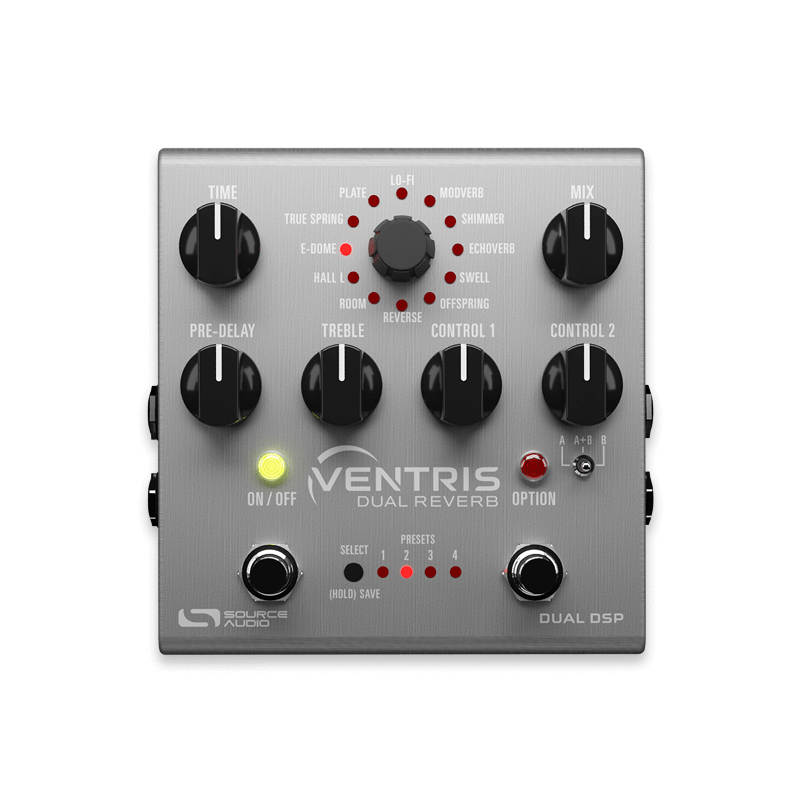
It's generally agreed upon that Kevin Shields of My Bloody Valentine is the guitarist that really put together all the pieces and really defined what shoegaze is. Of course, early echos of this sound can be traced back to a lot of different bands including The Velvet Underground, Cocteau Twins (coincidentally, Cocteau Twins guitarist Robin Guthrie has been using the Ventris Dual Reverb in recent years - read the article here), The Cure, Sonic Youth, and Jesus and Mary Chain, but it was Shields and My Bloody Valentine who really put a flag in the ground and announced the genre.
Here it is in all its pulsing, fuzzed out glory–the quintessential shoegaze track: "Only Shallow" off of My Bloody Valentine's Loveless album.
Of course the sound was picked up by other bands like Slowdive in the 90s right through to current bands like Nothing and Deafheaven. These groups maintain the barrage of fuzz and reverb that defines the genre, but move it into all kinds of exhilarating new directions.
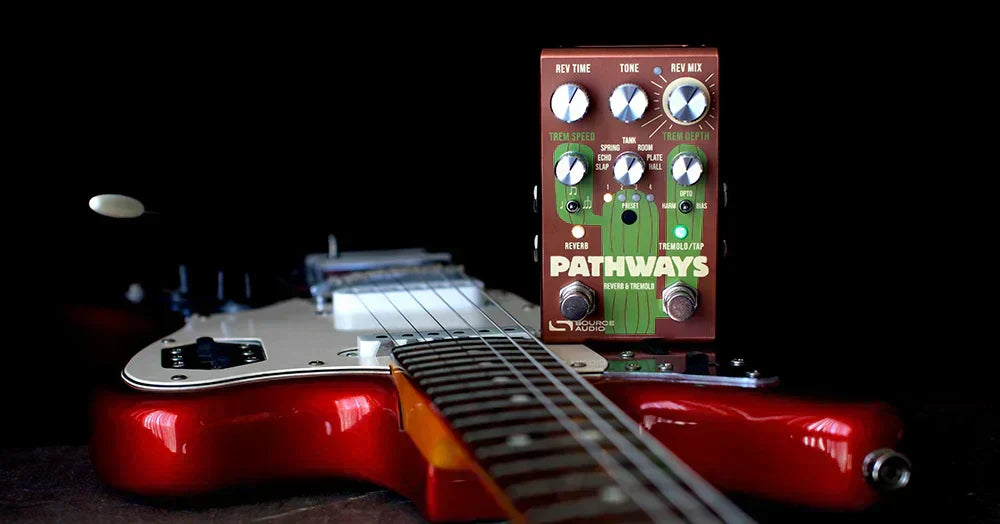
If you want to get an idea of how to use your Source Audio pedals to achieve the sound we're talking about, check out guitarist and YouTube creator Ambient Trash (a.k.a. Matt Rice). Matt is an excellent musician who specializes in shoegaze-inspired guitar textures. He recently released a video that beautifully demonstrates the Pathways Reverb & Tremolo in a shoegaze setting and how to create massive, immersive guitar sounds.
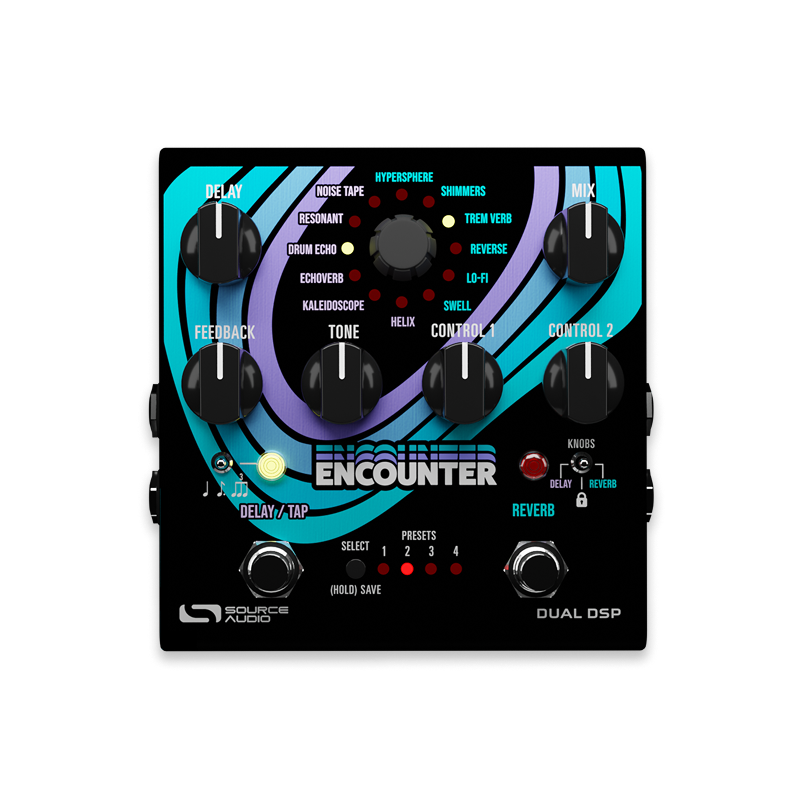
The Pathways demo is not the only Ambient Trash demo to focus on a Source Audio pedal. He also created an excellent video for the Encounter Ambient Delay + Reverb, another perfect pedal for shoegaze guitar.
We highly encourage you to try using your Source Audio gear with these techniques and find interesting ways to incorporate them into your own sound. Don't forget to share your sonic discoveries in Neuro as published presets. We're in the process of building the largest tone library in the world and we want you to be a part of it.
Pedals in this Article