A Conversation with Georgia South of Nova Twins

June 21, 2026: Xfinity Center - Mansfield, Massachusetts
A few years ago, a friend of ours forwarded us a video link with the following message: “Whoa, check out this band. They've been all over all the recent guitar and bass mags. The bass player says she wants her pedalboard to be a mystery so folks can't copy her. Maybe she's using a Source Audio ring controller?”
Soon after, a collective gasp echoed throughout Source Audio headquarters. It was our introduction to an incredible new band out of the UK called Nova Twins. This band burst through our screens like a freight train, a high-octane duo that fused elements of electronic music with crushing '90s-style guitar riffage. Throw in the style and swagger of '70s glam and the lyrical intensity of '80s and '90s hip hop, and you're just starting to scratch the surface of what this band is all about. It sounded completely fresh, impossible to categorize, and absolutely demanded to be heard.

Georgia demonstrating the Hot Hand Ring backstage at XFinity Center
The entire Source Audio staff immediately recognized the bright blue light emanating from a ring on bassist Georgia South's right hand. It was the unmistakable glow of our Hot Hand 3 Wireless Expression Controller, a.k.a. the "Hot Hand Ring." Check out the video:
Nova Twins Live in The K!Pit: KERRANG!
Before we go any further, here's an important bit of context: this video arrived shortly after we had discontinued production of Hot Hand. 😫 Hot Hand was a product we hoped would revolutionize the way musicians controlled their effect pedals. It was a lightweight wireless ring that used motion-sensing accelerometer technology to control effect parameters. Similar to the way an expression pedal lets you manually sweep a filter's cutoff frequency, Hot Hand gave you the same control simply by waving your hand in the air. (Learn more about Hot Hand in our History or Source Audio blog)
Unfortunately, only a select few musicians embraced the potential of our creation. But Georgia South embraced the potential of Hot Hand—big time!
If you're not familiar with Nova Twins, you owe it to yourself to dive into their discography. This explosive band grew out of the close childhood friendship between bassist Georgia South and guitarist/lead vocalist Amy Love. South grew up in London and Love just outside of London it in Essex. The two spent their early teenage years playing in various bands on the local music scene before eventually writing songs together. It quickly became clear that there was something special in the chemistry between South's aggressive, riff-heavy bass playing and Love's melodic punk-rap vocal style.
The duo first made waves on the London club circuit before releasing a self-titled debut EP, followed by the full-length albums Who Are the Girls? (2020), Supernova (2022), and Parasites & Butterflies (2025).
"Piranha": A great track from Nova Twins' latest album, Parasites & Butterflies
Nova Twins' sound is powered in large part by Georgia's massive, effects-driven bass tone. She essentially treats her pedalboard like a second instrument, using it to fill the sonic space of two or three musicians. Her gargantuan pedalboard is a rock 'n' roll machine, and Source Audio is honored to be part of her rig.
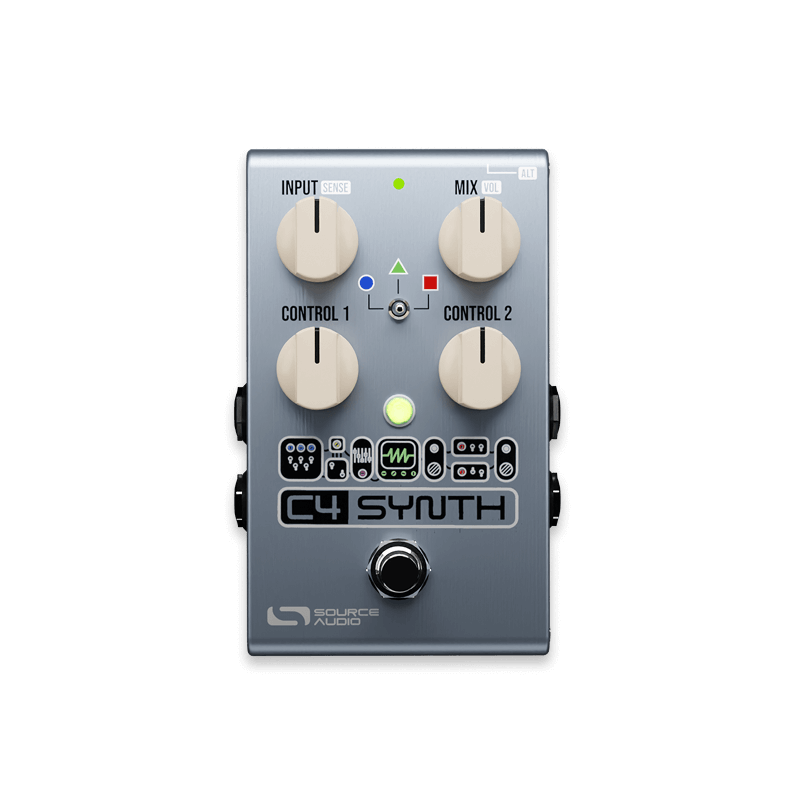
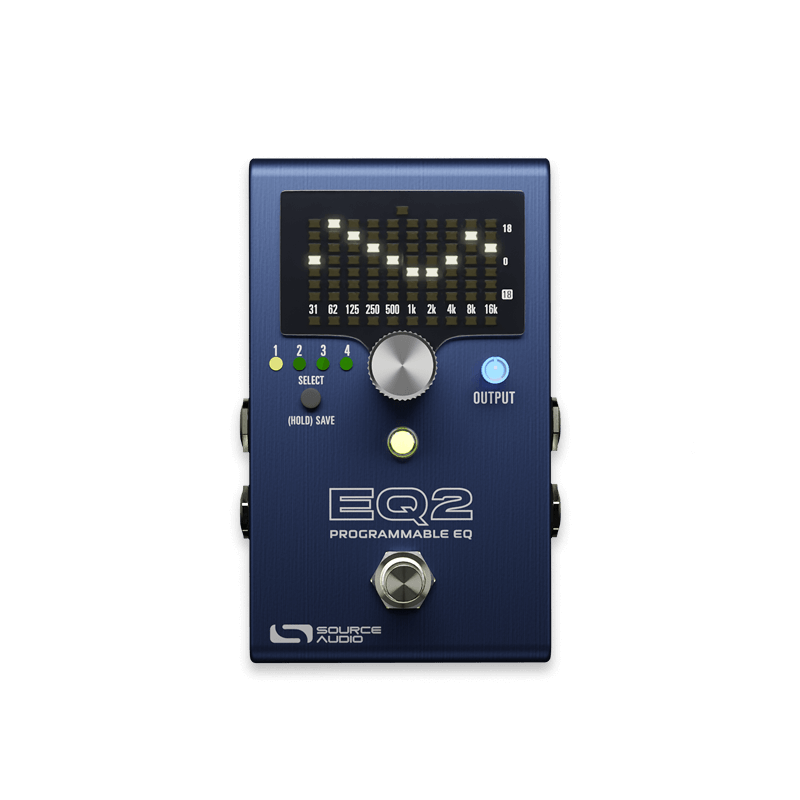
On the current tour, Georgia's board includes the Hot Hand Ring, EQ2 Programmable Equalizer, C4 Synth, and a pair of Source Audio filter pedals that shall remain unnamed. Those mystery pedals are part of her "secret sauce"—a combination of pedals completely covered in tape. We tried to uncover the secret, but Georgia politely declined to reveal her tone recipe. You've got to respect that... and we absolutely do!
The Nova Twins’ live show is stunning. The sheer size of Georgia's bass sound often gives Amy the freedom to set down her guitar and unleash her larger-than-life stage presence. Of course, when Amy straps the guitar back on, it's a full-on sonic assault. Both Amy and Georgia are endorsed by Marshall Amplification, so the combined firepower of Amy's wall of Marshall amps and Georgia's monstrous bass tone is staggering.
Both Georgia and Amy take great pride in the fact that there are no backing tracks, sequenced parts, or MIDI playback accompanying their performances. Every sound you hear is created live by Georgia, Amy, and their new drummer, Luke Campbell.
 Amy explores the Source Audio demo board
Georgia and Amy were kind enough to invite us to hang out before their show with Evanescence and Spiritbox at the Xfinity Center, just a few miles south of Boston. We spent some time experimenting with Source Audio pedals before sitting down with Georgia to talk about her approach to bass. Naturally, we had a lot of questions. We talked about giant bass tones, motion-controlled effects, mysterious pedals covered in tape, songwriting, touring, and some of the technology behind Nova Twins' unmistakable sound. Here's what Georgia had to say.

Source Audio: So, I guess we need to start with the Hot Hand Ring. Would you tell us about how you’ve incorporated it into your sound.
Georgia: Yeah, so as you know I love the Hot Hand. It's so fun! I've found a lot of cool ways of mixing it into the set, combining it with different pedals gives me my own unique take.
Source Audio: Well, we first saw you using it was a couple years back in the KERRANG! Live in the K! Pit video, which was amazing. More recently there was the NPR Tiny Desk concert. That got a lot of attention. We had a lot of people asking us about Hot Hand after that. So, thank you for drawing so much attention to our company!
Nova Twins on NPR Tiny Desk
Georgia: It's such an amazing little gadget and I'd love to talk to YOU about how it was made, because it feels like a magic trick. I mean, it's crazy.
Source Audio: Well, it's an interesting tool! It uses the same sort of technology that’s in an iPhone or a Nintendo Wii. It's basically a couple of small springs that tracks motion and acceleration and converts that info into an expression signal. When the company first started, we thought, “oh, everyone will want to use this,” but that wasn’t the case – ha ha. Hence it being discontinued a few years back.
Georgia: It's definitely a wild card, but I feel like a lot of people love it.
Source Audio: It’s got a small, devoted following. Certain musicians, like yourself, who are looking for new ways to create interesting sounds really love it. But there aren’t many musicians like you around–ha ha.
Georgia: Yeah, I love it. So, for instance, on the intro of our song called “Cleopatra” we adapted it in the live show and added a whole intro section with the ring.
Source Audio: Can you tell us a little about the pedals you’re controlling with Hot Hand?
Georgia: So, these are kind of like “special sauce.” (Note: As previously mentioned, Georgia is protective about how she creates her sounds. Still, we thought it wouldn’t hurt to ask 😅)
Take this sound. (Georgia plays a massive, fuzzed-out riff on the bass), I love the idea of it sounding like it's a race car that’s accelerating and shifting gears. That’s the idea behind the design of the sound. Especially with the ring. It feels like it's so manual, like you're actually driving something.
Source Audio: So, how does it usually go with a sound like this? Do you have the vision to create something that sounds a like a race car and then you figure out how to do it, or were you messing with your bass and the effects and you're like, ooh, that sounds like a car? I’m curious how that happens.
Georgia: Ha ha. Well, it was so long ago, but I think I had two separate sounds. I had the car sound without the ring, but then adding the ring elevated it even more. And then I really built the width of it with delay. So, if you're experimenting in a small rehearsal room, just imagining how can you make it sound like it's in like a huge arena. So just slap on some delay. And then all of a sudden, it's like so wide. Right?
Source Audio: Yeah! Delay is definitely a magical effect. It just makes everything sound better!
Georgia: But again, if you want the ring to sound super tight without the delay you can get that super tightness as well.
Source Audio: Can you tell us how you use the EQ2 Programmable Equalizer?
Georgia: Sure, the whole board is going through the Source Audio EQ. This has been such a game changer in our live show and in the studio, because we run Input 1 through some of the secret source stuff to really push the gains. And then back into Input 2, which just smooths out the whole soundscape, like the whole board. So it's just made everything super consistent.
Source Audio: OK. So, run through Input and Output 1 and have one EQ curve at the very front of your pedal chain, run it through all the pedals, then back into Input 2 of the EQ2 for a second EQ curve at the very end?
Georgia: Yeah, it just keeps everything really balanced. Especially when there's so many pedals, you have to try and make sure once you switch one off, there aren’t lots of volume drops and things like that.
Source Audio: That’s cool! It’s funny, we didn't really imagine during the development of the EQ2 that people would use the dual equalizer engines in series. We thought people might split the signal, you know, run Output 1 to one amp and Output 2 to another. But a lot of people are doing it like you’re doing, running it through Input and Output 1, then through a bunch of pedals or maybe the front end of an amp and then from either the end of the pedal chain or the effects return on amp, and back into the Input 2 and the second equalizer. So, yeah, people use it a lot of different ways.
Georgia: I also have the C4 Synth, which is really, really cool. I haven't had a chance to put it into the set yet, but I’ve been writing with it loads at home. It's just like super powerful and super clear. Like the subs, I remember I pressed it during a soundcheck, just to see what it sounds like through a fat PA. It’s crazy, it's so fat! Actually, I used it on the intro of “Sandman” on the last tour, and it's a bone rattler! It's just crazy. (Georgia plays a massive sounding riff through the C4)
Source Audio: Oh, nice. That sounds like a Moog bass preset. Now, is that a riff from a song or…
Georgia: That was one of the new ones that we've been working on.

Georgia dials in her tone with the C4 Synth
Source Audio: I love it! I'm curious, when you’re recording a Nova Twins album, are you using this pedalboard or do you experiment with different pedals that are in the studio?
Georgia: We go into the studio with our touring pedal boards. Those come with us everywhere. Sometimes we explore with pedals they've got in the studio. The producer will be like, try this or try this, and we will swap them out.
At home, we’re constantly ripping out the leads of this board and putting in new pedals. It always looks like an absolute mess. Today it’s actually quite tidy because the touring board has to be flight proof. Everything has to be intact. But at home, it's often just like leads ripped out everywhere and swapping out different stuff.
Source Audio: OK, so when you go into the studio, you've already dialed in a lot of the sounds you're going to use? Most of the sound experiments happen when you're writing?
Georgia: Yeah. So writing is when the real laboratory, full on nerdiness goes on. In the studio, we kind of go in a bit more prepared. You know, you're always under a budget–ha ha. We don’t want to waste time trying to figure out too much. But of course, I'm open to some experimenting as well.
Source Audio: Right! And do you think at all when you're recording about how you’re going to replicate a part live?
Georgia: Yes. It's like a tightrope to walk, because obviously when you're at home, you can do a section, like a chorus, and then a verse could be this whole other complicated pedal set up. I don't use MIDI to change the pedal settings, so sometimes I'm like, oh, that's really great, but how am I going to go from A to B in like a second?
So, you have to try and think, should I dial it back or how can I cut corners. Usually live, you'll hear the end of a chorus tail into a verse, whereas on the record you won't hear the transition as much. But live you'll hear like a little transition, like a stop where I can drop out earlier to quickly do the change. We'll add something like a cool drum fill or Amy will sing over that bit while I go into the next bit.
Source Audio: Yeah, that sort of thing can be its own kind of creative process. You know, how are we going to make this work on stage.
Georgia: For example, on the song “Monsters” (from the Nova Twins’ album Parasites & Butterflies) we figured out how to dial in the Hot Hand ring between sections. We blended it so Amy sings acapella and I'm literally dialing in the ring while she's singing. It’s like, oh my God, quick! I've got like two bars to turn the ring on and quickly reset everything. Usually, I don't love to take that risk because you've only got a set time to make it back in time for the drop. But we really wanted the ring in that bit, so it's worth the risk.
However, with a lot of our new stuff, we're actually doing full-on live takes in the studio as a whole band rather than it being in sections. That eliminates so much, because we already know how to play the whole song and it'll be exactly as it was, which is also really fun.
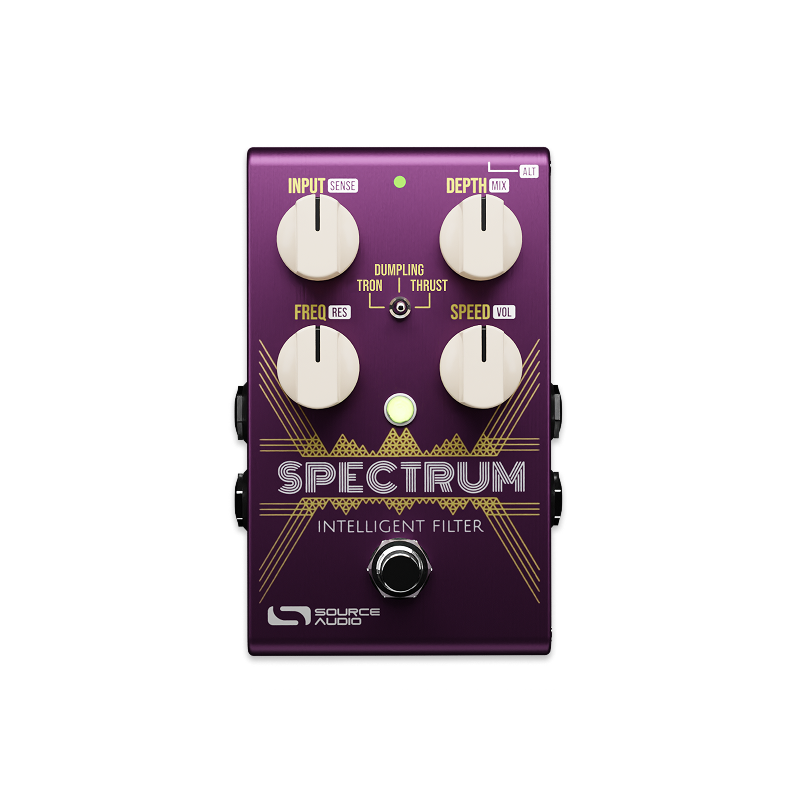
Source Audio: Yeah. It's just so innovative what you're doing, and how pedals are so integral to your sound. Can you talk about the filter sounds that you're getting out of these two guys (pointing at two Source Audio pedals on Georgia’s board that are completely covered in tape) or is that part of the secret sauce?
Georgia: So yeah, they are secret sauce–ha ha.
Source Audio: Okay, yeah, no problem.
Georgia: But you know, Source Audio is known for their incredible filter sounds. I’ve had a lot of fun over the years with them!
Source Audio: Well, like I said, it’s amazing what you’re doing with the band and how you’ve created an approach to bass guitar that is entirely your own. I can’t wait to hear all of it at the show tonight. Thank you so much for taking time to talk with us.
Georgia: Well, thanks for coming down!
A couple of hours later, Nova Twins hit the stage with all the high-voltage ferocity we've come to expect—and then some. The power and sonic sophistication of this band is jaw-dropping. Time and time again, I had to remind myself that all the sounds I was hearing were being made by just three musicians. Combine that with their unstoppable stage charisma, and it’s clear: this is a band built for live performance. They will be touring North America, South America, and Europe all summer long. We urge you to see them when they come to your town.
An amazing example of Nova Twin live show: Hellfest '24 in Clisson, France
For upcoming tour dates, head over to the Nova Twins website. And be sure to check out their latest record, Parasites & Butterflies.

Pedals in this Article